Best time to visit: October, November, December, January, February, March.
4.9 (250 reviews) Last updated: 14 July 2025
Day 1: The Heart of Enlightenment
Important Note for July Travel:
July in Bodh Gaya is peak monsoon. Expect heavy rainfall and high humidity. While most spiritual sites are open, outdoor activities might be affected. Carry waterproof essentials, wear comfortable footwear, and be prepared for potential waterlogging in some areas. Road conditions might be challenging for sites outside the main town.
Arrival in Gaya/Bodh Gaya & Hotel Check-in
Arrive at Gaya Airport (GAY) or Gaya Railway Station. Take a taxi/auto to your hotel in Bodh Gaya.
Travel: Taxi/Auto (approx. ₹300-₹500 from Gaya Airport, ₹150-₹250 from Gaya Railway Station)
Time: 20-40 min
Settle In
Mahabodhi Temple Complex
Spend the majority of your day at the UNESCO World Heritage Site, the Mahabodhi Temple Complex. This includes the Bodhi Tree, Vajrasana, and various sacred spots where Buddha meditated.
Entry: Free (Camera: ₹100, Video: ₹500)
Travel: Walk (if staying nearby) or local auto
Time: 3-4 hours (or more, depending on your interest)
Spiritual Core
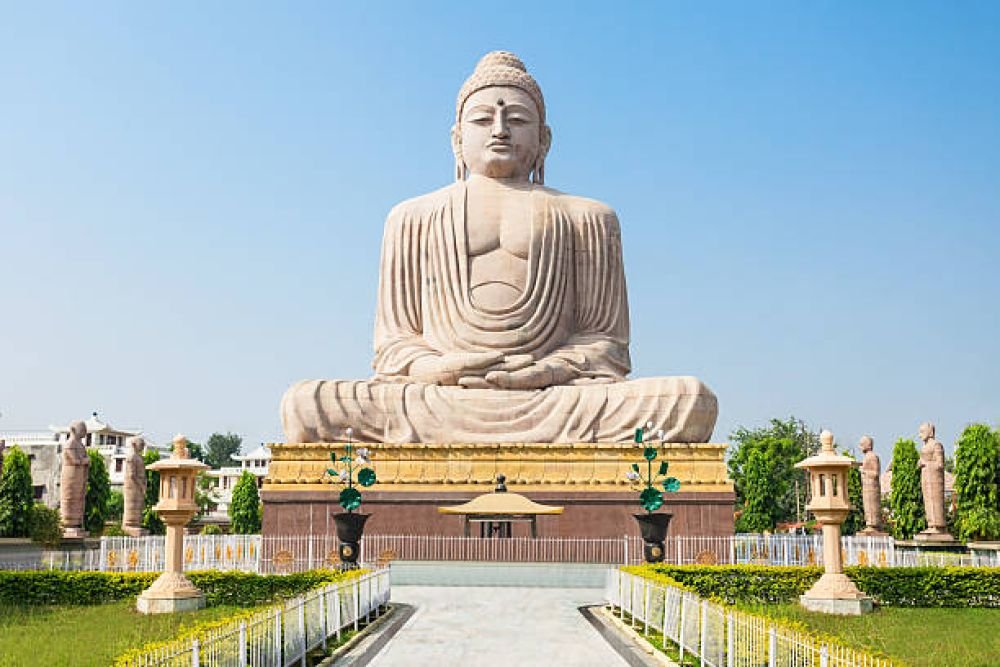
Great Buddha Statue
Visit the impressive 80-foot Great Buddha Statue, a symbol of peace and enlightenment.
Entry: Free
Travel: Walk (short distance from Mahabodhi Temple) or auto
Time: 45 min - 1 hour
Grandeur & Peace
Japanese Temple (Daijokyo Buddhist Temple)
Explore the beautiful Japanese Temple, known for its unique architecture and serene ambiance.
Entry: Free (Donations welcome)
Travel: Walk/Auto (nearby)
Time: 45 min - 1 hour
International Devotion
Accommodation: Day 1
Check into your hotel in Bodh Gaya. Many guesthouses and hotels are available near the Mahabodhi Temple.
Prices of hotels/guesthouses starting from ₹1000-₹4000 per night.
Day 2: Global Buddhist Heritage & Local Culture
Important Note for July Travel:
July in Bodh Gaya is peak monsoon. Expect heavy rainfall and high humidity. While most spiritual sites are open, outdoor activities might be affected. Carry waterproof essentials, wear comfortable footwear, and be prepared for potential waterlogging in some areas. Road conditions might be challenging for sites outside the main town.
Tibetan Monastery (Tergar Monastery)
Visit the vibrant Tibetan Monastery, a center for Tibetan Buddhist studies and practice. You might witness monks engaged in prayers and rituals.
Entry: Free (Donations welcome)
Travel: Walk/Auto
Time: 1-1.5 hours
Tibetan Culture
Chinese Temple & Bhutanese Monastery
Explore the distinct architecture and serene atmosphere of the Chinese Temple and the Bhutanese Monastery, each offering a unique cultural perspective on Buddhism.
Entry: Free (Donations welcome)
Travel: Walk/Auto (nearby)
Time: 1.5-2 hours
Global Serenity
Archaeological Museum
Visit the Archaeological Museum to see a collection of Buddhist artifacts, sculptures, and relics found in and around Bodh Gaya. This is a good indoor option during rain.
Entry: ₹10
Travel: Walk/Auto
Time: 1-1.5 hours
Historical Artifacts
Local Market
Explore the local market for Buddhist artifacts, handicrafts, and souvenirs. You can also find local food stalls.
Cost: Varies
Time: 1-2 hours
Shopping & Food
Accommodation: Day 2
Stay another night in Bodh Gaya.
Prices of hotels/guesthouses starting from ₹1000-₹4000 per night.
Day 3: Historical Outskirts & Departure
Important Note for July Travel:
July in Bodh Gaya is peak monsoon. Expect heavy rainfall and high humidity. While most spiritual sites are open, outdoor activities might be affected. Carry waterproof essentials, wear comfortable footwear, and be prepared for potential waterlogging in some areas. Road conditions might be challenging for sites outside the main town. Check local conditions before heading to Sujata Stupa or Dungeshwari Caves.
Sujata Stupa
Visit Sujata Stupa, located across the Falgu River, commemorating the village girl Sujata who offered Buddha milk-rice during his ascetic period.
Entry: Free
Travel: Auto (approx. ₹100-₹150 return). Note: River may be high during monsoon, affecting access.
Consider visiting the Dungeshwari Cave Temples, where Buddha meditated for several years before attaining enlightenment. This is optional due to potential monsoon road conditions.
Entry: Free (Donations welcome)
Travel: Auto/Taxi (approx. ₹200-₹300 return). Roads might be challenging.
Time: 1.5-2 hours (including travel)
Ascetic's Path
Departure from Bodh Gaya
Check out from your hotel and head to Gaya Airport or Railway Station for your onward journey. Allow ample time for potential monsoon-related delays.
Travel: As per your travel plans.
Time: Flexible (allow ample time for monsoon travel)
Accommodation: Day 3
No accommodation needed as you depart from Bodh Gaya today.